
Shipping Container Transport in Melbourne: What You'll Pay in 2026
If you just want a number, here it is. Shipping container transport in Melbourne usually costs between $450 and $850 for a 20ft container delivered by sideloader within the metro area. A 40ft container runs about $650 to $1,200. Once you head into regional Victoria the price follows the kilometres, from around $750 for a nearby town to $3,500 or more for somewhere like Mildura.
Those figures are a guide, not a quote. Two jobs that look the same on paper can price very differently once you factor in where the container is picked up, how heavy it is and whether the truck can actually get onto your site. This guide walks through how container transport is priced, what catches people out, and how to keep the bill reasonable.
We're Expert Logistics. We run container trucks out of Dandenong South and Laverton North and have been delivering containers around Melbourne and regional Victoria for more than 14 years. Everything below comes from what we see on the road every week. Figures were last reviewed in October 2026.
What does container transport cost in Melbourne?
For most local jobs you're looking at $450 to $1,200 one way, depending on whether the container is 20ft or 40ft and where it's going. This table shows typical sideloader pricing. Prices exclude GST.
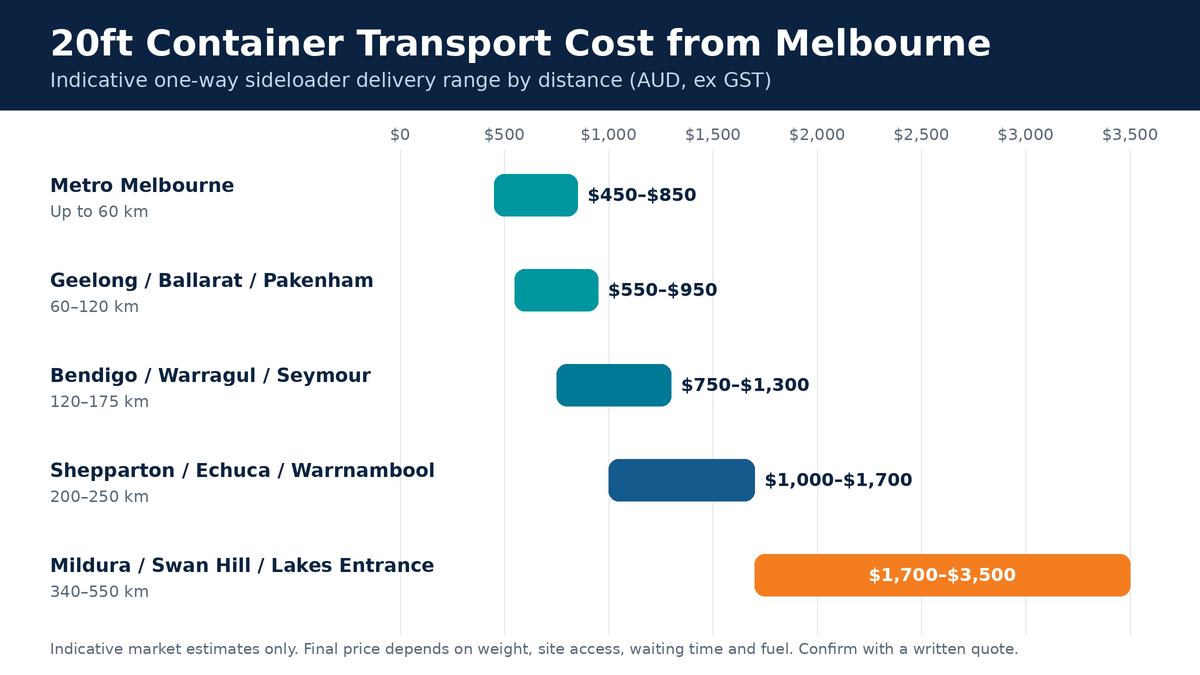
Chart of typical 20ft container transport costs from Melbourne by distance
Residential deliveries sit higher than industrial ones for a simple reason: a warehouse yard in Dandenong South or Laverton North is built for trucks, while a suburban street often isn't. Narrow roads, parked cars and overhanging trees all slow the driver down, and that time shows up in the price.
It helps to compare against what other Victorian operators publish. One Brooklyn-based company lists sideloader delivery from $495 for industrial sites and $550 for residential, and about $6.00 a kilometre one way for longer trips. That table dates from 2020, so fuel, wages and insurance have pushed the numbers up since.
What changes the price
Most of the difference between one quote and another comes down to five things.
Size and weight
An empty 20ft container weighs roughly 2,200 kg and an empty 40ft about 3,700 kg. What matters more is what's inside. A heavily loaded 20ft can be harder to move than a lightly loaded 40ft, and the price reflects that.
Pickup and delivery points
Distance is the biggest factor, but where you start matters too. Collecting from the Port of Melbourne, a depot or your own yard each involves different positioning. On regional runs the truck often drives home empty, which is built into the rate.
Getting onto your site
A sideloader is a big truck. Many Melbourne operators ask for around 4.3 metres of overhead clearance, 3 metres of width and firm, level ground. Low branches, soft ground, tight streets and steep driveways can add time, or rule out a sideloader altogether. A quick look at your site before booking saves headaches on the day. If you're not sure, send us a photo of the entry and the spot where the container will go, and we'll tell you whether a sideloader will fit.
Waiting time
Quotes usually include a short window for unloading, often about 20 minutes per container. After that, some operators charge from $30 per 15 minutes. Having your forklift and crew ready when the truck turns up is the easiest way to avoid it.
When you book
The lead-up to Christmas is busy, and port delays can push jobs around. Booking a few days ahead and staying flexible on timing usually gets you a better price and a firmer delivery window.
Sideloader, tilt tray or crane truck
A sideloader is a truck with two hydraulic arms that lift a container on and off the side of the trailer, so you don't need a crane at either end. It's the standard way to move containers in Australia, which is why you'll see them all over Melbourne's industrial areas.
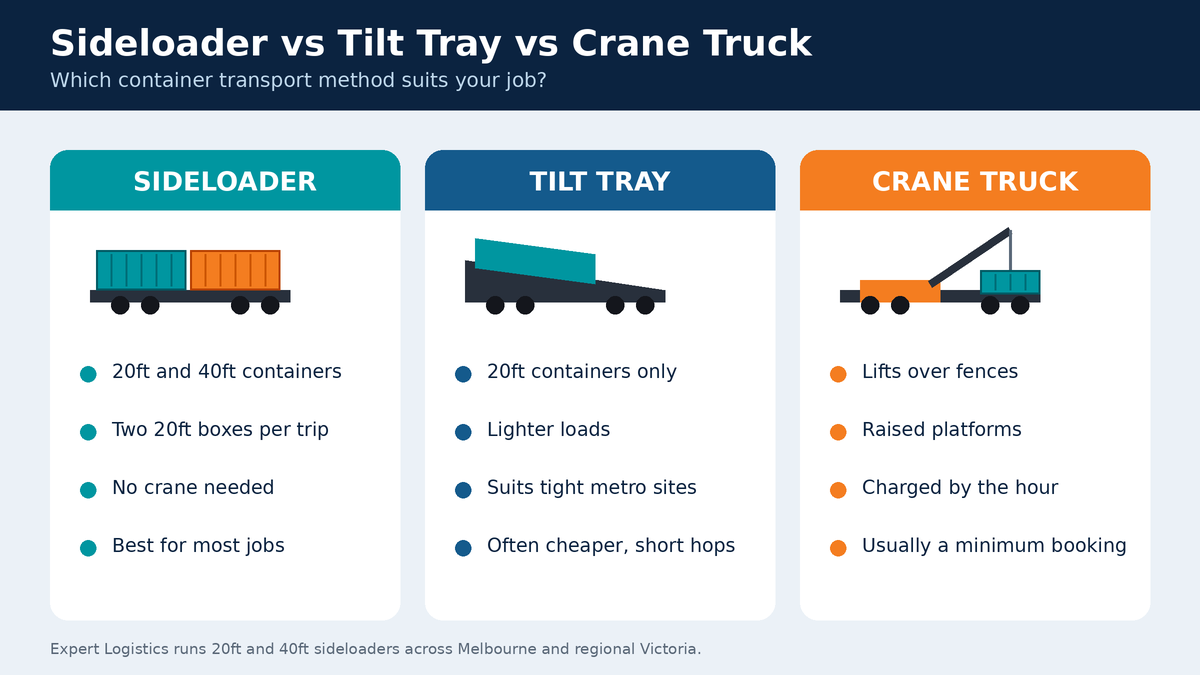
Comparison of sideloader, tilt tray and crane truck container transport
A tilt tray works for lighter 20ft containers and is often the cheaper pick for a short hop. One Victorian operator lists tilt tray metro jobs from about $275 and crane truck work from $245 an hour with a three-hour minimum. A sideloader costs a bit more, but it handles both sizes and heavier loads with less fuss.
Collecting from or returning to the Port of Melbourne
The Port of Melbourne handled a record 3.5 million TEU in 2025 and moves more than a third of Australia's container trade. With that much freight passing through, port cartage runs to tight schedules, and the cost of a pickup or return depends on more than distance.
A typical port job involves:
Terminal slot bookings. Miss your slot and you may need to rebook.
Container release and return. The shipping line decides when and where the empty goes back.
Queues at the terminal. Most carriers charge for waiting time when it gets busy.
Tailgate inspections and weighbridge tickets. These are needed for compliance and customs.
Drivers with an MSIC. Port access requires a Maritime Security Identification Card.
Delays at any step can lead to detention or demurrage charges from the shipping line. These sit outside the cartage rate and can sometimes cost more than the transport itself. It's worth using a carrier who handles bookings, tracking and returns for you. We collect from and deliver to the Port of Melbourne every day, with GPS tracking, booking and de-hire, and tailgate inspections as part of the job.
Extra charges to ask about
The base rate is rarely the whole bill. Before you say yes to any quote for shipping container transport in Melbourne, check whether it covers:
Fuel surcharge. This often moves with the diesel price.
Tolls. Melbourne's freeways add up on some routes.
Waiting time. Usually charged per 15 minutes after the included window.
Site problems. A bogged truck or a failed delivery can mean recovery or re-delivery fees.
Council permits. If the container will sit on the road rather than your driveway, you may need one.
Returning the empty container. Sometimes this is quoted as a separate job.
After-hours or weekend work. This often costs more.
A good carrier will list these in writing. If a quote is vague, ask for the details before you book.
Ways to keep the cost down
You can lower the price without cutting corners on safety.
Send two 20ft containers together. A sideloader can carry two at once, so each box costs far less than two separate trips.
Be ready when the truck arrives. A forklift, a crew and clear access mean the driver can leave within the included time.
Book ahead. Flexible dates let us fit your job into an efficient route.
Check your site first. Confirm the clearance, the ground and the turning space before the truck leaves the depot.
Stick with one carrier for regular work. Businesses with steady volume often get better rates, and an online booking portal makes repeat jobs quicker.
What to have ready when you ask for a quote
You'll get a more accurate price, faster, if you can tell us:
Whether you need a 20ft or 40ft container, and whether it's loaded or empty.
The pickup and delivery addresses, including any port or depot details.
The approximate loaded weight.
Site access details: gate width, overhead clearance, ground surface and any obstacles.
Your preferred date and delivery window.
Whether you need de-hire, a tailgate inspection, or handling of palletised or LCL goods.
When you compare quotes, compare like with like. A price that includes fuel, tolls and de-hire isn't comparable to one with a lower base rate that leaves those out.
Why customers choose Expert Logistics
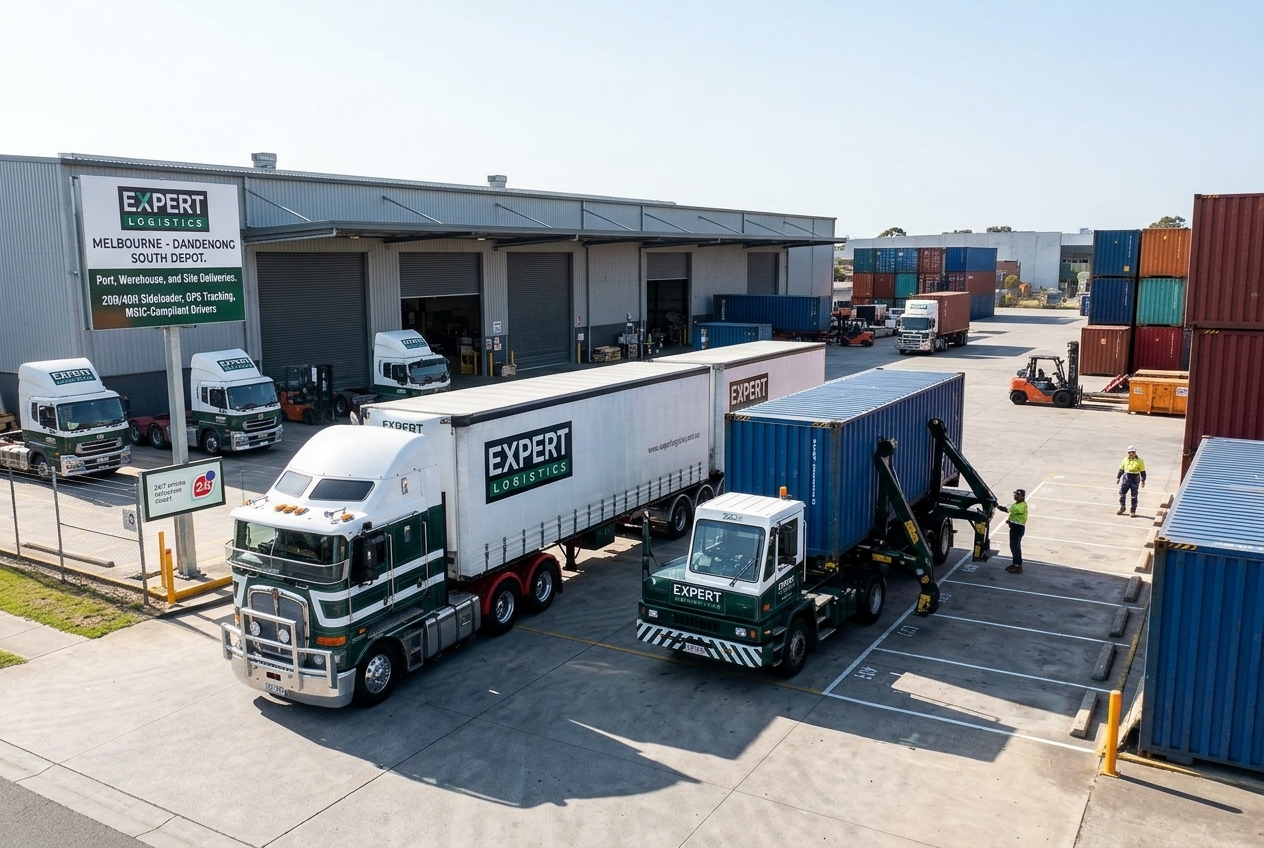
We're a Melbourne transport and logistics company with depots in Dandenong South and Laverton North. Our container work covers metropolitan Melbourne and regional Victoria, and here's what you can expect from us:
20ft and 40ft sideloaders for port, warehouse and site deliveries.
GPS tracking on every truck, so you can see where your container is.
MSIC-compliant drivers for port access.
A 24/7 online portal for bookings, proof of delivery, photos and weighbridge tickets.
On-time delivery, so your staff aren't left standing around waiting for a late container.
If you also need storage or distribution, we offer warehouse solutions and general transport alongside container cartage. You can see where we operate on our service areas page.
Frequently asked questions
How much does it cost to transport a shipping container in Melbourne?
A local 20ft delivery usually costs $450 to $850, and a 40ft about $650 to $1,200. Regional Victoria costs more, from around $750 to $3,500 or more for long distances. We give you a fixed, itemised price once we know the container size, route and site details.
How much does it cost to move a 20ft container locally?
Within Melbourne, a 20ft container generally costs $450 to $850 one way by sideloader. A tilt tray can be cheaper for small jobs on suitable sites. Residential deliveries tend to cost more than industrial ones because access is harder.
What's the difference between a sideloader and a tilt tray?
A sideloader lifts 20ft and 40ft containers using hydraulic arms and doesn't need a crane. A tilt tray slides a 20ft container off the back of the truck and suits lighter loads. Sideloaders cope with heavier containers and a wider range of sites.
Do I need a permit to have a container delivered?
Usually not, if it's going onto private property such as your driveway. If it will sit on a public road or nature strip, check with your local council first. We can talk you through access and safe placement.
How long does container delivery take in Melbourne?
Metro deliveries are often done within a day of the booking being confirmed. Regional runs depend on distance, and port pickups depend on terminal slots and container release. Booking early gives you the most reliable timing.
Can one truck carry two containers?
Yes. A sideloader can carry two 20ft containers at once, which brings the cost per container down. The combined weight and your site access still need to suit the truck.
Get a free container transport quote
Tell us the container size, the route and a little about your site, and we'll send back a clear price with no surprises. Call us on 03 9768 2254, email sales@expertlogistics.com.au, or request a free quote online. You can also read more about our container transport and sideloader services.